Tokyo eSIM
Everything you need to stay online in the world's largest city: coverage, airports, how much data you need, where to stay, what to do, and how a Japan eSIM gets you connected the moment you land.
The easiest way is a Japan eSIM installed before you fly. It activates the moment you land at Narita or Haneda, gives you fast 4G and 5G across the city and the trains, and needs no SIM counter, no pocket wifi, and no ID. For a week of maps, transit, and translation, 5 to 10 GB is plenty.
Getting the most out of Tokyo, online
Few cities reward a little preparation like Tokyo. It is vast, dense, and gloriously complicated: dozens of interlocking rail lines, signage that flips between Japanese and English, restaurants down unmarked basements, and small points of etiquette that reward knowing a bit before you arrive. Being online from the moment you land turns all of that from a puzzle into a pleasure.
How to get connected in Tokyo
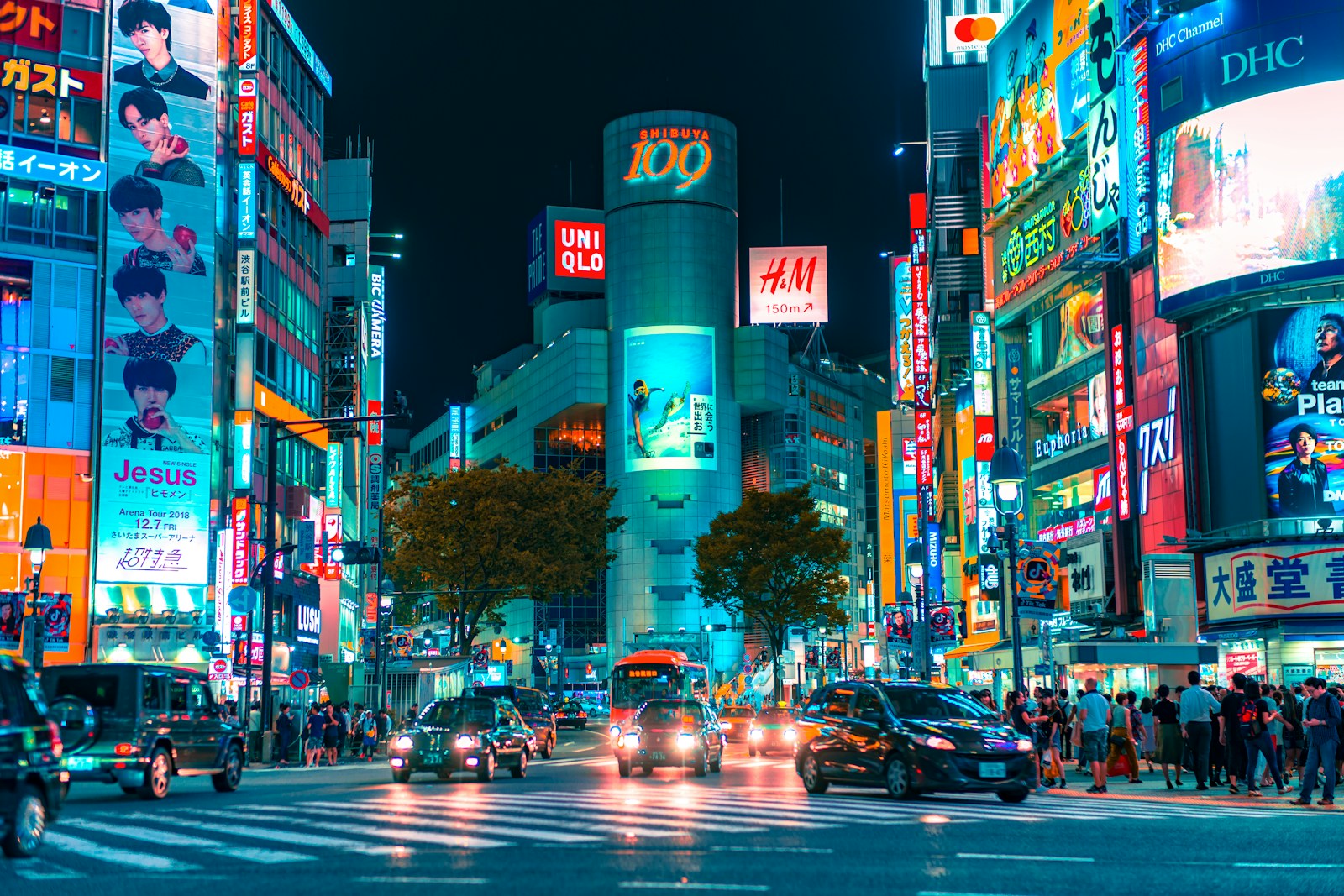
Coverage in Tokyo is superb. You get fast 4G and 5G across the wards, on the Yamanote loop and the subway lines, and throughout the airports, with signal that holds up even in crowded Shibuya and on deep underground platforms. The one honest caveat is sheer scale: on a packed festival or New Year night, or inside a full stadium, networks can slow under load, as they would anywhere. Japan's carriers are NTT Docomo, au by KDDI, and SoftBank, and a travel eSIM roams onto them automatically.
Choose a Japan eSIM and pay in crypto, with no card and no ID.
Scan the QR from your dashboard. Nothing to carry, nothing to collect.
It activates at Narita or Haneda, so you are online for the train in.
eSIM vs pocket wifi vs SIM card vs roaming in Tokyo
Five ways to get online in Tokyo, and how they really stack up.
| Option | Ready on arrival | Effort | Cost | Best for |
|---|---|---|---|---|
| Travel eSIM | Yes, instantly | Install once, nothing to carry | Low | Almost everyone |
| Pocket wifi | After pickup | Reserve, collect, carry, charge, return | Medium | Groups sharing one device |
| Local SIM card | After the shop | Find a shop, swap your SIM | Low to medium | Long stays, if you can buy one |
| Airport / cafe wifi | Patchy | Free but tied to a spot | Free | A quick check, not navigating |
| Home roaming | Yes | None, but watch the bill | Often very high | A short trip, if your plan is cheap |
For most visitors the eSIM wins: online the moment you land, nothing to rent or return, and no ID. Pocket wifi still suits a group sharing one connection. Costs are rough guides, not quotes.
Getting from Narita and Haneda to central Tokyo
Your eSIM activates the moment you land at either airport, so you can check live times and platforms on the way in. The main routes:
| Route | Airport | Reaches | Time | Good for |
|---|---|---|---|---|
| Keisei Skyliner | Narita | Ueno / Nippori | ~45 min | Fastest train from Narita |
| Narita Express (N'EX) | Narita | Shinjuku, Shibuya, Tokyo | ~60-80 min | Direct to west-side hubs |
| Airport Limousine Bus | Narita & Haneda | Major hotels | Varies | Heavy luggage, no changes |
| Tokyo Monorail | Haneda | Hamamatsucho | ~15 min | Quick hop to the Yamanote loop |
| Keikyu Line | Haneda | Shinagawa | ~20 min | Cheap, direct to the centre |
Haneda sits much closer to central Tokyo than Narita. Times are typical, not guaranteed.
How much data do you need in Tokyo?
Set your trip length and how you travel, and we will estimate the data you are likely to use in Tokyo and suggest a plan.
Estimate your data for Japan
Social, photos, some video
An estimate to guide you, not a limit. Wi-Fi at your hotel covers a lot, and you can top up any time, so it is fine to start smaller.
Best neighbourhoods in Tokyo
Four areas cover most first trips, each with its own character.
Shibuya & Shinjuku
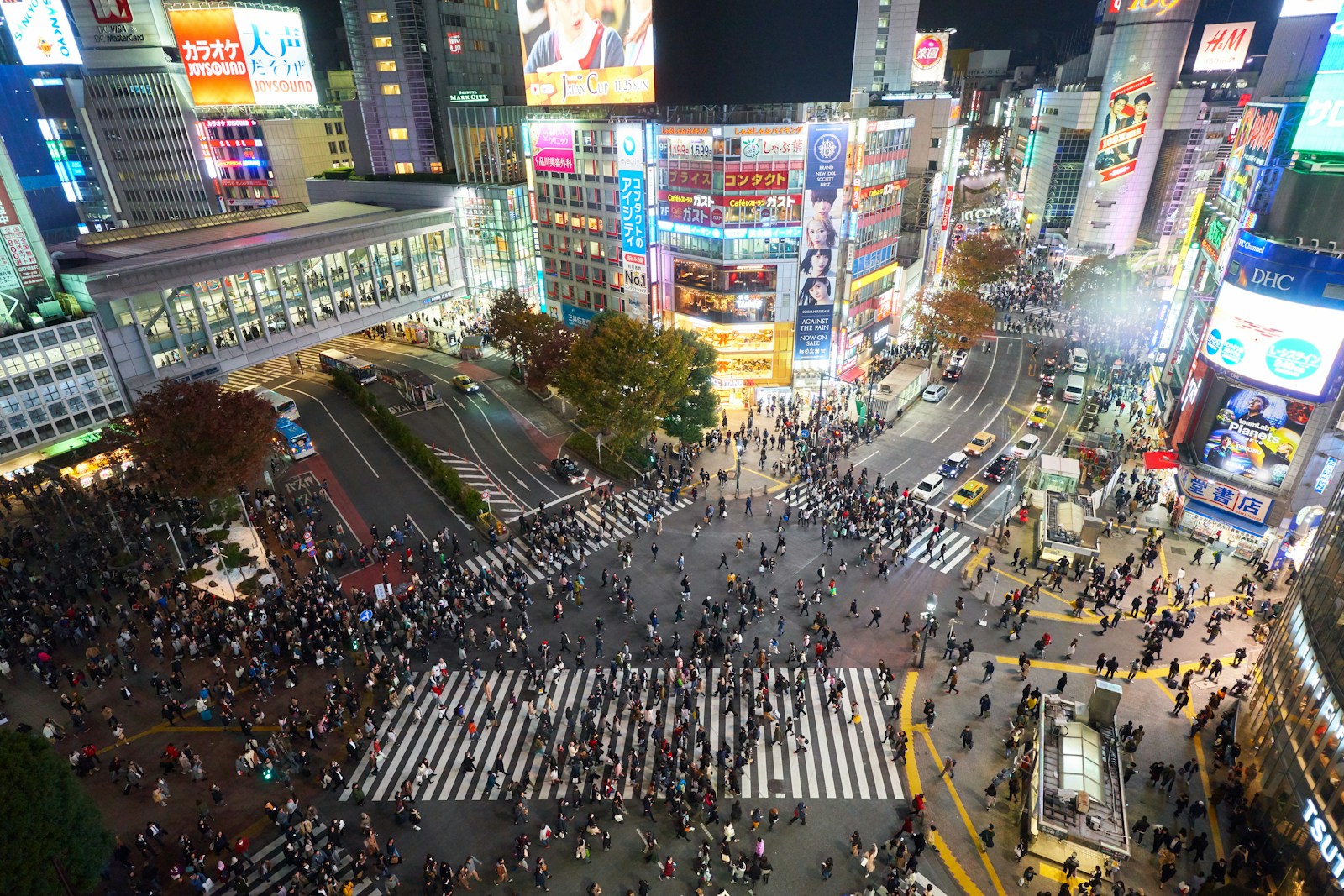
The dense, neon west side: the scramble crossing, nightlife, and Tokyo's busiest stations. Where most first-timers base themselves.
Asakusa & the east
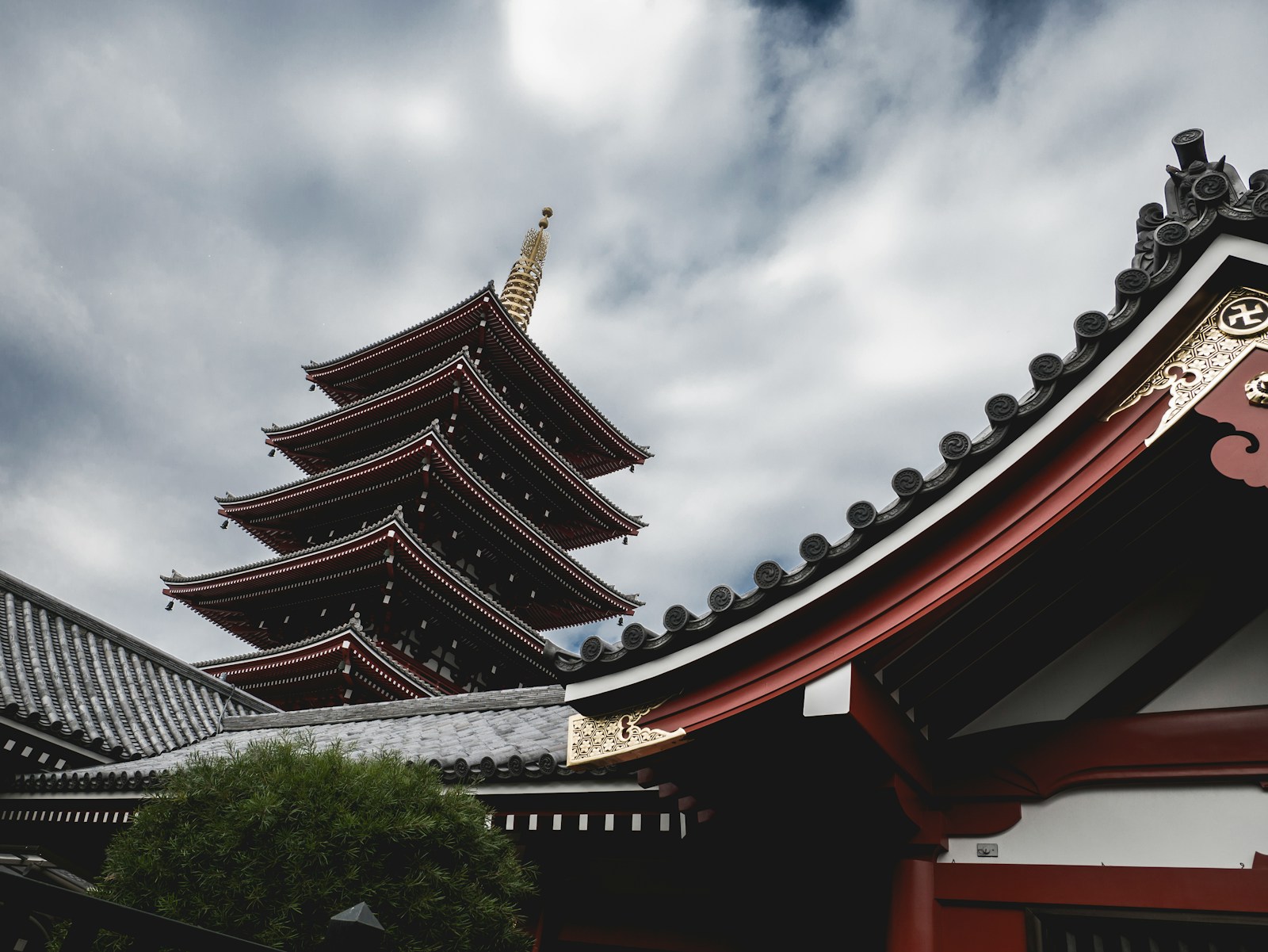
Old Tokyo around the Senso-ji temple and the Sumida river, lower-rise and traditional, good for a slower day on foot.
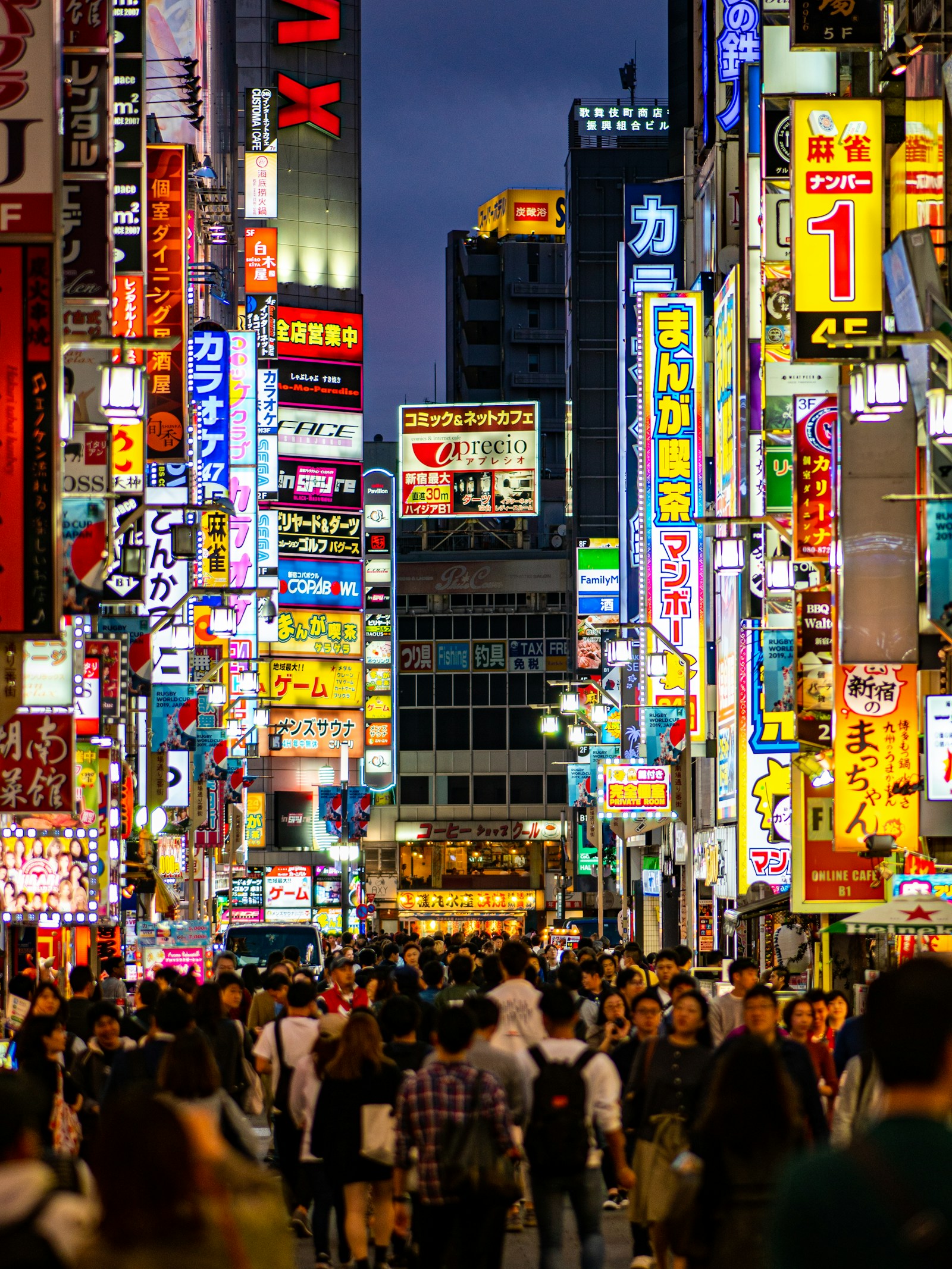
Shinjuku nightlife
Neon streets, izakaya alleys, and the tangle of the world's busiest station. Loud, late, and never dull.
Harajuku & Omotesando
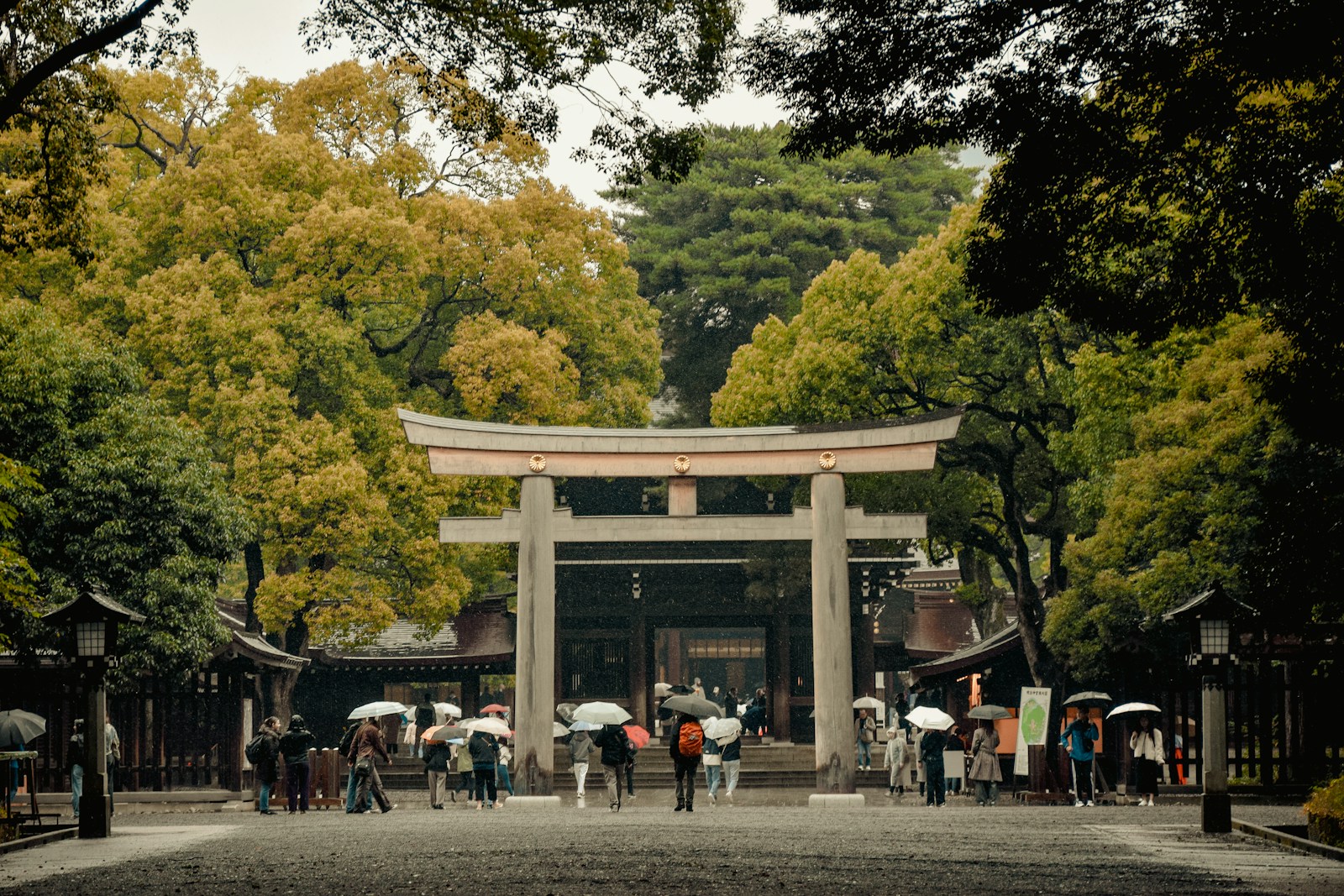
Youth fashion and the calm of the Meiji shrine on one side, tree-lined designer avenues on the other.
What not to miss in Tokyo
The Shibuya scrambleSenso-ji in Asakusa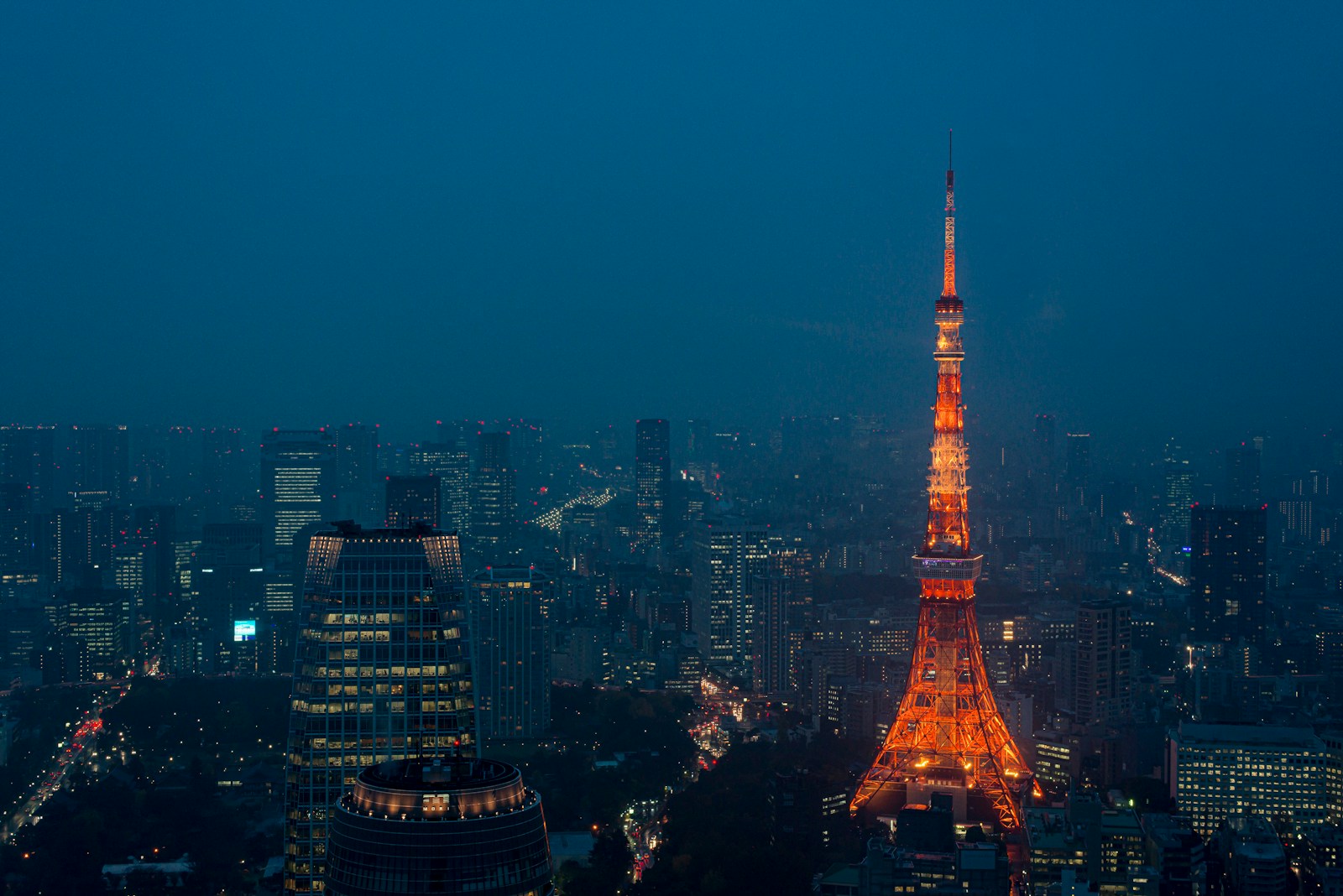 Tokyo Tower viewsMeiji shrine calmShinjuku after darkPeople-watch in Shibuya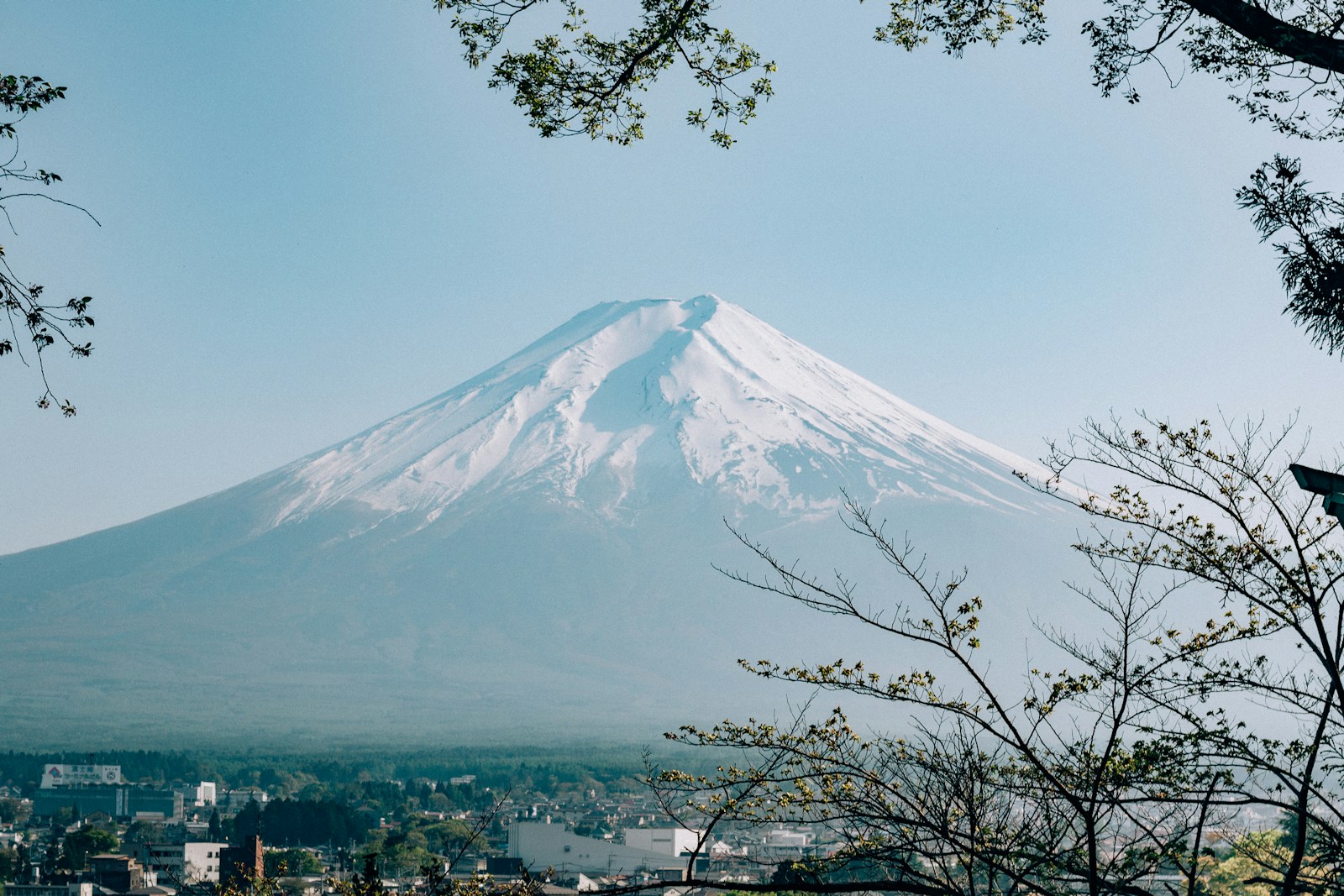
Easy day trips from Tokyo
A Japan eSIM covers the whole country, so the same line keeps working the moment you leave the city. Three favourites within reach of a Tokyo base:
Bus or train to Kawaguchiko for the classic view.
Around 2.5 hours each way; doable in a long day.
Shrines and forest, or hot springs with Fuji views.
Best time to visit Tokyo
Spring and autumn are the sweet spots: mild, dry, and beautiful. The bars show the average high through the year, with the two ideal windows highlighted.
Spring, Mar-May
Cherry blossom and mild days. The prettiest and busiest season.
Summer, Jun-Aug
Hot and humid, rainy in June, fireworks and festivals later.
Autumn, Sep-Nov
Cool, clear, and golden with autumn leaves. The other ideal window.
Winter, Dec-Feb
Cold but crisp and quieter, with clear Mount Fuji views.
Getting around Tokyo
Tokyo moves by train. The JR Yamanote loop links the major hubs, the metro fills in everything between, and a rechargeable Suica or Pasmo card, now loadable into a phone wallet, taps you through every gate. Google Maps and the local transit apps route you door to door in English, which is exactly why a live connection matters so much here: the network only becomes legible when you can look it up in real time.
Practical tips
Small spots and shrines can still be cash-only.
One of the world's safest big cities.
Quiet on trains, no eating while walking.
Pocket wifi or eSIM in Tokyo?
For years the default advice for Japan was to rent a pocket wifi device at the airport. It works, but it means a reservation, a pickup and a drop-off counter, a gadget to carry and charge, and a deposit. A travel eSIM has quietly made it unnecessary for most visitors: it lives on your phone, activates itself on arrival, and there is nothing to return.
The one real case for pocket wifi is a group sharing a single connection across several devices. For a solo traveller or a couple, an eSIM installed before you fly is simpler, cheaper, and online the instant your plane reaches the gate at Narita or Haneda.
Why travellers choose SimVala
4.8from 39,452 verified reviews“Used the data plan for Google Maps and messages during a trip. Did exactly what I needed.”
“Got a number for business use. The activation was quick and I didn't have to contact support.”
“I was in Europe for two weeks and used the eSIM instead of roaming with my Canadian SIM. Much simpler.”
“Landed in Italy late at night and didn't want to find a shop. Had the eSIM ready already.”
“Needed a separate number for a few weeks. The whole process was quite simple.”
“Used the VoIP service for work calls. Took a little time to get everything set up, but works well now.”
“Bought it for a weekend in Albania. Installed it before leaving Zagreb and had no problems.”
“I mainly use it for data when travelling. So far the service has been reliable.”
“Didn't want another physical SIM. The QR setup was quick and I was connected pretty much immediately.”
Tokyo eSIM & travel FAQ
Does an eSIM work in Tokyo?+
Yes. A Japan eSIM roams onto the local networks (NTT Docomo, au, SoftBank) and gives you fast 4G and 5G across Tokyo, the trains, and the airports. Install it before you fly and it activates when you land.
Will my eSIM work as soon as I land in Tokyo?+
Yes. It activates when you reach Narita or Haneda, so you are online for the train into the city with no SIM counter and no pocket wifi pickup.
Is there mobile coverage on the Tokyo metro?+
Yes. Signal reaches through the subway and JR lines, including underground platforms and tunnels, so maps and messages keep working as you move.
How much data do I need for a trip to Tokyo?+
For a week of maps, transit, translation, and photos, 5 to 10 GB is comfortable. Use the calculator above for your trip, and you can top up any time.
eSIM or pocket wifi for Tokyo?+
For most travellers an eSIM is simpler: no rental counter, no device to carry or return, and it is online the moment you land. Pocket wifi mainly suits groups sharing one connection.
Narita or Haneda, does it matter for getting online?+
Both airports have full coverage and your eSIM activates at either. Haneda is closer to central Tokyo; from Narita the Skyliner or N'EX train gets you in.
Do I need Japanese to get around Tokyo with a phone?+
No. With a live connection, camera translation handles menus and signs and transit apps route you in English.
Is Tokyo safe for travellers?+
Very. Tokyo is consistently one of the safest major cities in the world. Ordinary common sense is plenty.
When is the best time to visit Tokyo?+
Spring (cherry blossom, March to May) and autumn (crisp and colourful, September to November) are the ideal windows. Summer is hot and festive; winter is cold, quiet, and clear.
Can I use my eSIM outside Tokyo, in Kyoto or Osaka?+
Yes. A Japan eSIM covers the whole country, so the same line works on a day trip to Kyoto, Osaka, or Mount Fuji.
Ready for Tokyo?
Install a Japan eSIM before you fly and land already online, paid in crypto with no ID.